Westminster Hall
Wednesday 20 March 2013
[Mr Peter Bone in the Chair]
Government Policy (Kenya)
Motion made, and Question proposed, That the sitting be now adjourned.—
(Mr Randall.)
9.30 am
Eric Joyce (Falkirk) (Ind): It is difficult to overstate the importance of Kenya to the United Kingdom and, indeed, the wider international community. Perhaps first and foremost, Kenya is at the centre of international efforts to ensure the security of our own citizens. Citizens of Kenya have played a high price for that role and for their pivotal location in the world in recent years, from the US embassy bombing in 1998 through to the al-Shabaab attacks of last year, yet that is rarely reflected in public discourse here in the UK.
It is not necessary to go into detail about the way in which Kenya has co-operated magnificently with her allies, because a good deal of that information is public. However, much of it, by necessity, is unknown by those who are not directly involved. What is a matter of considerable public knowledge is Kenya’s leadership role in stabilising its northern neighbour, Somalia. Authorities, from the UN Secretary-General to the leaders of all the major states involved, have officially recognised that Somalia is where it is today—fragile but, I hope, on the road to recovery—because of the efforts of Kenya’s servicemen and women in defeating al-Shabaab and securing Mogadishu. What is more, Kenya has done that while showing restraint and ensuring the appropriate UN and African Union mandates are complied with, such as by re-hatting Kenyan troops as African Union Mission in Somalia—AMISOM—troops.
Kenya’s role extends well beyond military action, too. Virtually all humanitarian efforts in Somalia are mounted from Kenya, and they have saved the lives of hundreds of thousands of Somalis. Experts are in universal agreement that Kenya has deployed only appropriate force to assure its territorial integrity and that it has gone far above and beyond the call of national duty to help developed nations, such as the UK, to secure the safety of their citizens—here in the UK and abroad.
Anyone who has served in the British Army knows, like many others, how important Kenya has always been to our military capacity. The unrivalled training facilities that Kenya has always provided so freely have been a fundamental component of the UK’s capacity to launch military operations, including, for example, in our defence of the Falkland Islands just over 30 years ago. Many British servicemen regarded Kenya as the reason why we were able to mount that operation, given the personal and unit training capacity. Anyone who goes on the British Army’s website will read about the UK’s continuing reliance on, and gratitude for, Kenyan facilities, notably in respect of Operation Herrick in Afghanistan, but also in respect of British Army operations around the world.
20 Mar 2013 : Column 264WH
Beyond military and security considerations, I have recently spoken to private equity investors who are interested in projects in Mogadishu, which is testimony to how astonishingly quickly Governments and investors can act together to build much needed infrastructure and services, following even the direst of civil collapses. That has been made possibly by Kenya, first and foremost. It will be some time before we can be sure that Somalia is unstoppably on the road to proper reconstruction, but when it is, we will have Kenya to thank for that.
Communications in Kenya are also fundamental to investment throughout the region. I have visited Africa many times over the past dozen years, and virtually every time, I have travelled through Nairobi. It is a simple fact that Kenya is Africa’s pre-eminent junction for flows of trade and investment, people and, inevitably, information. From a trade and investment perspective, Kenya has many buoyant businesses, and it is the world leader in mobile payment systems. The Minister will be well aware of the UK’s early role in facilitating M-PESA. Off the top of my head, I believe that the former Commonwealth Development Corporation—now the CDC—was involved in seedcorning that project in Kenya.
M-PESA is a payment system that utilises the Safaricom network and harnesses microfinancing principles to deliver a superfast and highly effective means of bill payment. It has been so successful that conventional banking institutions have made significant efforts to become involved, through the Government, in the regulation of such systems. That is because mobile platform providers such as Safaricom enjoy confidence among local consumers at a higher level than that for the banks. Although Kenya, unlike many African states, has a relatively mature local banking system, I understand that almost 20 million Kenyans—it has population of just over 41 million—have M-PESA accounts. That enables them to make payments and transfer cash. It involves trading in what we would view as relatively small amounts, but those amounts fit the size of the domestic markets that small traders are accessing.
M-PESA has also been successfully extended into Tanzania. One of the critical aspects of the system is that in Kenya, and across Africa, the mobile infrastructure is developed, but fixed-line infrastructure is undeveloped, so services are jumping ahead. In the UK, we are looking at 4G and considering how we might be able to access new services through mobile platforms, but people in Africa really have no choice. The sophistication of mobile platforms such as M-PESA is remarkable, and in that way Kenya leads the world.
About 15 or 16 months ago, I attended the Internet Governance Forum in Nairobi, at which many of us were privileged to meet a number of senior Kenyan Government Ministers. It is clear that Kenya takes its role in internet governance very seriously, because it makes an enormous investment in new media technologies.
I said that Kenya is a junction for people and information within Africa. I know people who arrange to meet African colleagues and potential clients from across the continent in Kenya. I know people who go on holiday there, and I also know people who, a few days ago, helped to secure the release of 25 mariners from the Somali pirates who were holding them hostage. Of course, the UK Government are wary of that detail, but I will say a word or two about it, because it is pertinent to Kenya. The whole business of security in relation to
20 Mar 2013 : Column 265WH
piracy off Somalia involves significant reliance on Kenya, and such security is another area of activity that has saved the lives of many people.
Kenya suffers the consequences of—if I can call it this—non-terrorism related piracy. I know that we might call all Somali piracy terrorism, but there is a clear distinction in my mind, because while it is all done for money, some people are highly motivated by simply the commercial gains, whereas others, such as al-Shabaab, are motivated by what they can spend the money on. Nevertheless, piracy continues, and Kenya helps to do everything that it can to help to fix the problem at the macro level and, more significantly, in very practical ways that, for good reason, are rarely discussed.
I should say, perhaps as a side note, that while it is in vogue for some non-governmental organisations to say that they do not negotiate with hostage takers, responsible employers ensure that their employees are properly insured in case they are taken captive, particularly in dangerous areas of the world. That insurance is almost invariably taken out on the London markets, and the unsung people who get on with negotiating and sorting immediate crises are almost invariably British. Indeed, the overwhelming majority of people and companies involved in ship security for anti-piracy work off Somalia are British. Britain has an enormously important role to play, and Kenya sits at the core of things, because during an arrest operation, pirates are often taken to Kenya and then the Kenyan justice system endeavours to deal with the situation, which is clearly a contentious issue in itself. The Kenyan Government have handled things responsibly, and there is clearly a close relationship between the various navies of the developed nations and the Kenyan Government, because invariably such people could end up—and in some cases do end up—on trial in Mombasa.
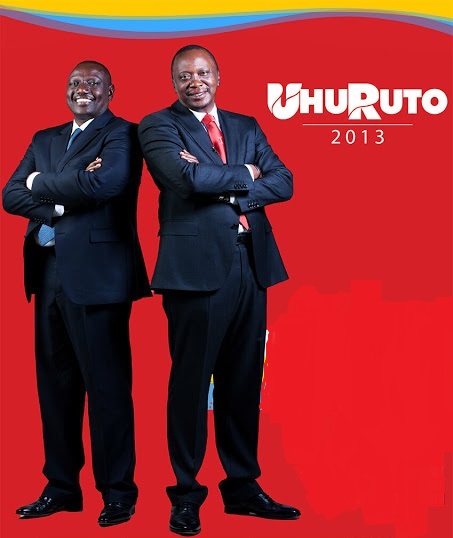
Having stressed some aspects of our crucial mutual relationship with Kenya, I would like to move on to recent events regarding the Kenyan presidential election and the International Criminal Court. Media reports are still reporting the result of the Kenyan presidential election as “razor-thin”. In fact, President-elect Uhuru Kenyatta won by almost seven points on an 86% turnout in an election that was regarded by observers as fair and free, and was, thank God, peaceful. Prime Minister Raila Odinga, the losing candidate, has observed the law and rules, and lodged a court appeal, which will be considered in due course.
Going into the election, there was a perception in Kenya that the UK and US Governments, as well as some others, were not wholly impartial. It was said that UK diplomats had sought to encourage an Odinga win and that they had made comments during the tallying process that had seemed to work towards enabling a second-round run-off, which might have disbenefited Kenyatta, the first-round winner. I have scoured all the sources I can—as you know, Mr Bone, our resources in this place are very good for scouring the international media—and I also have many contacts and friends in the media across the world and in theatre in Kenya, but I can find no source whatsoever that serves as reasonable evidence of such a public bias. I could find no example
20 Mar 2013 : Column 266WH
whatever of a public comment by a UK diplomat or Minister anywhere. We can draw, in this place at least, our own conclusions about that.
There is a well-known quote by a senior US official that is now said everywhere in Kenya. I do not know the exact context in which he said it—it might have been in a speech—but that comment is “choices have consequences”. It is certain that the comment was made, although I would not wish to put it in the wrong context, and whether it is accurate or not, it did, in itself, have consequences. As I think the Minister will know, the quote was taken by some in Kenya as an implied threat that if Kenya did not vote for the developed world’s preferred candidate, there might be a price to pay in one way or another.
As you will be well aware, Mr Bone, I am not an academic expert. I was not present on the ground during the election period on this occasion, and of course I do not claim the expert knowledge of our diplomats and Ministers. However, I think that it is fair to say that there was a strong perception in Kenya that powerful nations were threatening Kenyans against voting for Kenyatta, who is now the President-elect, but that made them more likely to do just that—why would it not?
Going into the election, analysts were suggesting that Prime Minister Odinga perhaps had a two or three-point lead. I was never particularly convinced of that, and such a lead would be more or less within the margin of error in any case, but the vote was clearly very tight. However, I believe that a significant element of Mr Kenyatta’s margin of victory came in the form of a statement by Kenyans that if they were required to choose between sovereign self-determination and the patronage of foreign powers, they would always choose the former. It seems to me that it would be best if Kenyans did not feel—whether there is any foundation to this or not—that they needed to make that choice ever again.
The situation is ongoing, however, owing to the still-live International Criminal Court indictments of Mr Kenyatta and Deputy President-elect Ruto. I know that the Minister will wish to be measured and careful with his words on that subject, as he is with all his words. Although it is essential that we respect the processes of the ICC—Kenya is doing precisely that at the moment, as are the President-elect and Deputy President-elect—it is important to understand the political nature of the ICC. I am aware that the UK and other international Governments are seized of the situation’s trickiness, to say the least, but it is important to put these matters on record.
Two years ago, I had the privilege of spending several hours discussing the nature and processes of the ICC with its then chief prosecutor, Luis Moreno Ocampo. He was incredibly generous with his time, and I left his office with a far greater understanding of, and much more good will towards, the ICC than I had had when I entered it. My concern was that although the role of the ICC is of great importance and its writ runs across the world—a country does not need to have signed up to and ratified the ICC, in the admittedly unlikely event that it is referred to it by a full member of the UN Security Council—everyone who had been indicted was African. All 30 people who have been indicted to date are African. At the time, the number was a little less
20 Mar 2013 : Column 267WH
than that—perhaps 15 or 20. However, the fact remains that all 31—I shall come to the one shortly—who have been indicted by the ICC are African.
When I went to see Luis Moreno Ocampo, I was unsure of the sense of indicting a Head of State, in the form of President Bashir of Sudan, and I had doubt about the case of Jean-Pierre Bemba of the Democratic Republic of the Congo, who was indicted over allegations regarding incidents in the Central African Republic. However, I was struck by the fact that to the untrained eye, to put it mildly, the ICC was keeping away from countries that might have implications for powerful nations such as China, Russia, the United States and ourselves, and focusing all its efforts on less powerful African states. As Mr Ocampo convinced me, two wrongs do not make a right. There is, of course, evidence that major abuses have taken place in Africa, and the ICC should of course be able to investigate those cases and, if necessary, indict people. Nevertheless, the fact that all 31 indictments to date have been against Africans conveys the clear impression that the likelihood of an ICC indictment depends on a country’s strategic importance.
To cut to the chase, I have no idea—I am not a lawyer, and I am certainly not an international lawyer—about the merits of these cases. I do not even endeavour to look at the legal processes in the ICC. I am not an expert, so I would not wish to argue the merits or otherwise of the indictments in respect of Deputy President-elect Ruto and President-elect Kenyatta. The violence after the 2007 Kenyan election was of course serious, yet none of us can have any doubt that far more serious events have taken place in other parts of the world.
More to the point, there is strong face-value evidence that the ICC acts when it thinks that it can have a benevolent effect—I mean that in the broadest sense. For example, although the cases of Liberia and Sierra Leone were not ICC ones, it is clear that the violence there came to an end, and people were brought to account, because of the combined effect of careful and decisive military intervention followed by a due process of international justice. Indeed, that is the purpose of the ICC, although I stress that the Sierra Leone case and the Liberia case, involving Charles Taylor, were not under the ICC. The principle is very clear. It does follow, however, that sometimes it is more sensible and effective for the ICC to allow other mechanisms to take priority.
In theory, or in practice, the ICC is quasi-independent or quasi-autonomous—call it what you will. Ultimately it can be answerable to the UN Security Council, but its judicial and investigative processes are entirely independent. I am sure, Mr Bone, that you love quasi-autonomous bodies in the UK, and non-departmental bodies in theory act independently—and often, one might say, unaccountably—of Government. The processes of the ICC are robust and must be independent, but in the end it is a political organisation. I believe that the oversight is political, and that political oversight needs some kind of expression.
This week, the ICC has been considering the cases of Mr Kenyatta and Mr Ruto. Although those cases are technically separate, Mr Kenyatta’s co-accused has now been discharged, and many experts say that much of the evidence that there apparently is against Mr Kenyatta comes from a compromised source. Although, of course,
20 Mar 2013 : Column 268WH
the Minister cannot comment on the legal processes of the ICC, I simply flag up to him that it would be unconscionable if, for a considerable period, a cloud or a pall hung over the President of Kenya and the Government of Kenya, and indeed our relationship with Kenya, which is of such fundamental importance. This is not something that we can simply leave to technicalist and—I mean this in the nicest possible way—bureaucratic processes in The Hague that, even if they are legal, are disconnected from a wider political process.
You will be pleased to hear, Mr Bone, that I am drawing my remarks to a conclusion. At the weekend, another alleged war criminal who has been indicted, Bosco Ntaganda, who has been on the run for some time from the eastern Congo, surrendered himself to the Rwandan Government. I do not know the merits of the case against Bosco Ntaganda, although I do know the case quite well. It seems to me that the ICC exists precisely to deal with the fear that is created in places such as the eastern Congo by rampaging bandits and the rape and murder that frequently accompany them, rather than to deal with what are essentially matters of state. However we have arrived at this situation, this really cannot be up to the ICC and its processes. Governments cannot stand by and say, “It’s a process that has nothing to do with us,” when it comes to something as fundamental as our relationship with Kenya.
Mr Gregory Campbell (East Londonderry) (DUP): Does the hon. Gentleman agree that it is important to distinguish between the ICC process, which he has outlined at length, and what we hope will be the long-term strategic stability of the Kenyan nation in Africa, and its connection and relevance to the UK in terms of our investment and assistance in aiming to ensure that a peaceful, prosperous and corruption-free Kenya is the legacy for the future?
Eric Joyce: The hon. Gentleman is absolutely right. We all agree with the international rule of law and we see that the ICC has a role, but we also understand that there is an even larger public benefit at play across the world. It is for politicians to fix this. We benefit enormously as a nation from our relationship with Kenya, so this is not entirely altruistic, but those of us who care about African states, as all of us do, and particularly the importance and pivotal significance of Kenya, need to get the balance right. The hon. Gentleman will be aware of particular cases when we have to say, “This is an overall objective.” It is about peace and strong relationships, and ensuring economic growth and development, and the protection and security of our citizens. We somehow have to make international justice work where it can.
There is a degree of symbolism in the ICC. The US and China have not signed up to it and Russia has not ratified the treaty. In each case, I understand why that has happened. I remember vividly our debate in the House 10 or 11 years ago when we passed the Act that implemented the treaty. There was genuine concern on both sides of the House that the ICC could be misused. Those three major states and India stayed out of it because they were concerned that it would not dovetail well with how they saw the world, which I can appreciate—that, in itself, is an indication of the political aspect of
20 Mar 2013 : Column 269WH
the ICC. That is not to be cynical, but apportioning strategic importance to countries, and thereby excluding them from the ambit of the ICC—in effect, that is done by indicting only Africans—is a significant issue. If we choose to do that, we need to recognise that Kenya is far too important to be treated as if it were a minor and strategically unimportant state, although of course the UK Government would not treat anyone as if they were unimportant.
It might be strange if I were to make a speech about President-elect Uhuru Kenyatta without referring to what some might call our post-colonial legacy, although I will not bang on about it—I do not have a PhD in post-colonialism. His father was president of Kenya at an important time. People feel strongly attached to his father’s legacy for the nation of Kenya now. I am of course talking about President Jomo Kenyatta. Britain has played with an entirely straight bat. To be honest, I think that there has been a little bit of hubris because one American diplomat made one unfortunate comment, although it might have gone beyond that—I really do not know.
When it comes to African states, it is always possible that internal politics reflect the possibility of external post-colonial influence by a misguided British Government, and that be can be reflected in the conduct of internal politics, as to some degree has been the case. The current and previous Governments dealt with that well. Frankly, however, President-elect Uhuru Kenyatta saw an opportunity, as any proper politician would, to jump all over it, thinking, “This is an opportunity to establish my own credentials as a defender of the nation and our national integrity.” He is, of course, also his father’s son, which helped enormously. He was already a strong candidate, but that all helped his campaign. Any politician would have done the same in that situation.
The risk for the UK is that it is seen as trying to impose “white man’s justice” by going to Africa to tell those nice black folk how to get on and run their countries. Countries across Africa will rebel immediately against that, and that will become part of their internal politics. We can see it in Zimbabwe. There is a tiny risk in Zimbabwe that we sometimes look as though we are on one side, when we need to be very careful to be right down the middle. That is not to say that we should have the same international detachment to international justice as the Russians and Chinese—I understand why they do it; they have very different political systems. The risk for the UK is that we look as though we are reflecting past traditions, as I am certain that Ministers and officials know.
Britain needs to play the whole Kenyan situation with a straight bat—I am a Scotsman, so I have no idea of the rules of cricket; I just use the metaphor—and to be seen as doing so by the Kenyans. We should do whatever we can from now on to facilitate an absolute normalisation of our relationship with Kenya.
Mr Peter Bone (in the Chair): It might be helpful for Members to know that nobody has indicated to the Chair that they want to speak. If those who wish to contribute would stand, it would be helpful.
20 Mar 2013 : Column 270WH
9.55 am
Martin Horwood (Cheltenham) (LD): It is a pleasure to serve under your chairmanship, Mr Bone. I apologise to you and other Members, because I must leave before the end of the debate. I commend the hon. Member for Falkirk (Eric Joyce) on securing the debate and on the well-informed way in which he introduced it. He was right to warn in his closing remarks against a patronising neo-colonial attitude, and yet it is right to praise Kenya for being, in many respects, a model of stability over many decades, a sometimes patchy but none the less committed democracy in east Africa, and for the stability it has helped and attempted to bring to the rest of the region. He was right to refer in his opening remarks to Kenya’s important contribution in relation to Somalia, both in African Union forces on the ground and in anti-piracy operations, for which the whole international community has good cause to be grateful.
Kenya is an important and overwhelmingly democratic member of the Commonwealth of nations. It has strong cultural, political and other links to this country. I am probably not alone in having strong constituency links to Kenya; Cheltenham is twinned with Kisumu. The strong civic, educational and voluntary organisation links between Kisumu and Cheltenham extend to youth conferences, through the charity Global Footsteps, which operates in both Kenya and the UK, and are an example of the strong links between the two countries. Nevertheless, Kenya has faced challenges, many of which the Department for International Development has highlighted.
Although absolute poverty has declined somewhat, it remains high in Kenya. DFID figures show a decline from 52% in 1997 to 46% in 2006, which is progress, but not great progress. They also highlight the fact that inequality remains high, that about 25% of Kenyans do not have enough income to meet their basic food needs, and that progress on the millennium development goals has been patchy and especially weak on issues such as maternal and child health. New approaches to providing basic services, such as health and education, are needed if the millions of poor Kenyans are to prosper. I entirely endorse that view.
DFID also highlights the political risks. Kenya’s image as a stable democracy faced great challenge at the time of the previous elections. The violence and issues with the ICC that followed pose a risk to not only Kenya’s reputation, but its progress. It is striking that the one year in which an otherwise incredibly impressive economic growth rate was not achieved was that which followed the election violence.
Kenya’s level of corruption and transparency, and the impunity that still exists, are difficulties. It is sad to note that Kenya is ranked 154 out of 182 countries on the Transparency International corruption perception index. Important parts of British Government policy towards Kenya are directed towards what might be termed the more traditional forms of aid and development support, but strong emphasis is also rightly placed on governance. The DFID programme stretches to work on health—HIV/AIDS, in particular—education, humanitarian aid and social protection, but it also includes trade growth, private sector development and a deliberate programme on governance.
That programme has included making people aware of the importance of their right to vote and how to register, which resulted in 12.7 million voters, 49% of
20 Mar 2013 : Column 271WH
whom were women, registering for the referendum not long ago on Kenya’s constitution. UK aid has also been used to increase the transparency and accountability of Parliament by opening parliamentary committees to the public and showing live debates on TV—something to which I am sure we can all relate. It has also provided support for organisations independent of Government that investigate corruption and monitor how taxpayers’ money is spent. For example, the National Taxpayers Association monitors Government use of taxpayers’ money. That emphasis on governance is absolutely right and important.
We have just seen a presidential election, and I suppose that it is absolutely right to congratulate Mr Kenyatta on his victory, but at the same time it is right to point out that he has in the past bravely said that he will comply with the International Criminal Court process. His commitment is welcome, and I hope very much that he maintains it. Kenya is a party to the International Criminal Court, and that is a matter of pride for Kenya. I am not sure whether the hon. Member for Falkirk was implying criticism of the International Criminal Court process—a process I consider extremely important—but he mentioned that it sometimes seems to go light on countries such as China. Unfortunately, and regrettably, China is not a party to the International Criminal Court.
Eric Joyce: I do not intend to be critical of the ICC per se. I referred to the fact that the ICC’s remit effectively covers the whole world, because permanent members of the Security Council can refer cases to it whether or not the country involved is a member. Technically, therefore, the ICC covers China, Russia and anywhere else, but those countries might not consider it in their interest, and I can understand that.
Martin Horwood: I take that point. It is important that, as far as possible, all countries comply with, take part in and support the International Criminal Court process. It is a matter of pride for this country and for Kenya that we have been parties to the International Criminal Court system and that we support it, and I hope that Mr Kenyatta continues to support his country’s participation in the process.
Some interesting comments were made during the election campaign, particularly the references to the British high commissioner and the implication that there was undue influence on behalf of the British Government in the election. That was an unwise accusation, which I am sure is rejected absolutely by the British high commissioner, Christian Turner, who has a very high reputation. We ought, perhaps, to approach that with humility; we all sometimes say things in election campaigns that we regret. Once in a position of responsibility, however, we need to move on, and the same should apply to Mr Kenyatta. He should now swiftly bury the hatchet and move on to building much better relations with the British Government, because there is a potential benefit for both parties.
I have referred to Kenya’s growth rate. It has achieved a rate of 5% over most years in the past decade, which is something I suspect the Chancellor of the Exchequer would give his eye teeth to be able to report about the UK later today. Kenya’s economy is the largest and most diverse in east Africa, and the country is potentially
20 Mar 2013 : Column 272WH
a very valuable economic, trading and political partner for this country. I think that we would all want to see a process whereby Kenya moved from being an aid recipient, and came out of that post-colonial mentality and relationship entirely, into a relationship in which Britain and Kenya regarded each other as friends, and economic and political partners. That should be the future for Kenya, and I hope that British Government policy towards Kenya will do its utmost to make that a reality.
10.3 am
Jim Shannon (Strangford) (DUP): It is a pleasure to make a small contribution to the debate.
I want quickly to comment on the importance of Kenya and the United Kingdom and their role together, and also to comment on the opportunities that I have had in Kenya and in my interaction with some Kenyan citizens with British passports who live in my constituency. The hon. Member for Falkirk (Eric Joyce) and others have talked about the importance of Kenya, and it is good to come to this Chamber to speak on the issue and to underline the importance of the United Kingdom of Great Britain and Northern Ireland and Kenya, and of where we can go from here.
Question marks over the election have been well illustrated by other Members, and I do not intend to dwell on them. I agree with the hon. Member for Cheltenham (Martin Horwood) that it is important to move on, realise where we are and take advantage of opportunities. The importance of the link between us and Kenya is well known because of the colonial relationships we have had over the years. We have become very interdependent, and the strong traditional and historical links between that nation and ours are important, as are the links today as Africa changes. The economic links are also important, and perhaps the Minister will comment on that in his response. I am always impressed with the Minister, and I do not say that in a condescending way, because when it comes to the issues that I and others feel in our hearts, he recognises them too, and that is the important thing when it comes to responding and encapsulating what we are all thinking. We look forward, therefore, to his response.
Economic links with Kenya are important, and we already have them in place. Traditionally, those links have been more important for the United Kingdom than for other parts of the world, but we must be aware that other countries are now equally interested in taking advantage of them. I had the opportunity of being in Kenya last year, and China’s presence there was very apparent. China was deeply involved in massive road building, and I would like to have the tarmac or the cement contract for that because it would last for ever.
We have people skills in this country, and yesterday my right hon. Friend the Member for Belfast North (Mr Dodds) spoke on the importance of the UK’s links with other countries. We have people skills and construction skills, and the ability to take people from here to Kenya to help. We should be doing that sort of construction work in Kenya. No disrespect to the Chinese, but why are we not there? That is the very point that many Members made in this Chamber at this very time yesterday morning. Whether or not it is the direct responsibility of the Minister, I would like to see some ideas about how we can build on that.
20 Mar 2013 : Column 273WH
Something that did not come up in yesterday’s debate was the importance of water. Water in all parts of Africa is important, and we have many capable companies in the United Kingdom that could be given the contracts to improve accessibility to clean water right across Africa, and in particular in Kenya. Perhaps the Minister will give us an idea of how we can do that. We have very strong health and medical contacts with Kenya as well, and that is important because we want to increase the life span of people there. Tourism is important, not because of the programmes on TV that we have all seen but because it is an opportunity to see Kenya’s potential and its preservation of wildlife so that, rather than taking advantage, we can enjoy what there is in Kenya.
As I mentioned, the presence of China in Kenya is obvious. They are active everywhere in the country, and they are in every country in Africa. They are a major influence in the continent, and we do not want to lose our influence in any part of Africa, especially not in Kenya, to other countries. When it comes to mining, industry and the economy, what are we doing as the United Kingdom of Great Britain and Northern Ireland to help?
I have been involved with helping some Kenyan citizens in my constituency with immigration and personal issues, as all Members will have done as society across the whole United Kingdom becomes more cosmopolitan than ever before.
In the past two years I have been a member of the armed forces parliamentary scheme, which has given me the opportunity to go to many parts of the world. One place I went to last year was the British Army Training Unit in Kenya—BATUK—of which the hon. Member for Falkirk spoke. Our training camps in Kenya are vital, because they train our soldiers before they go to Afghanistan. As the sphere of war and our influence decreases in Afghanistan and the possibility of other spheres of conflict in Africa increases, BATUK is more important than ever. The British Government have spent a lot of money on their training camps in Kenya. We were there last year, when they were spending more money on a new training camp. That again underlines the important role that, for many reasons, we in this country have with Kenya. We need stability, and it is very important to have that over the next period.
I want to comment on the importance of Kenya and its stabilising role in the area. As other Members have said, Kenya contributes 2,000 troops to Somalia. Kenya is a very stabilising country in east Africa, but other countries, including Somalia, are very destabilising. It is important for this country and for Africa as a whole that Kenya is stable, and that it can use its influence in other countries in the area to ensure that peace reigns and that the destabilising influences of Muslim jihadist and other terrorist groups are diminished. That comes off the back of Kenya, backed by us and the United States of America, playing a very clear role.
Piracy off the east coast of Africa has been touched on by other Members. I believe that we can play a bigger role, as can Kenya, in addressing that issue. Perhaps it is time for the Foreign Office to have an officer in the embassy whose role would be to work with other countries to ensure that the piracy issue is addressed at the highest levels. There is a diplomatic role, as I have
20 Mar 2013 : Column 274WH
said, but there is also a military role, and perhaps that officer in the embassy in Kenya might, if at all possible, co-ordinate and improve such matters.
To conclude, Kenya’s role is critical to the future of Africa, but the relationship of the United Kingdom of Great Britain and Northern Ireland with Kenya is also critical to that, because Kenya alone cannot achieve the stabilisation that is needed. It is time to move on from the elections and to grasp the future for all the people in Kenya. Whether people are religious or not, I was very impressed to be informed on my travels in Kenya that no other place has as many churches per 100 yards. I have never seen as many churches in my life—Presbyterian, Elim Pentecostal, Jehovah’s Witness, Roman Catholic, Methodist, Church of Kenya—and they were incredible. That tells me that the people have a wish to do better and have an interest in each other. It is in our interests to play our part for Kenya, through this Government, as well as through this Westminster Hall debate.
Mr Peter Bone (in the Chair): Before I call the shadow Minister, it might be helpful to say to the Minister, because I appreciate that he does not have a Parliamentary Private Secretary here, that inspiration from his officials should come via the Doorkeeper.
10.13 am
Ian Lucas (Wrexham) (Lab): It is a pleasure to appear before you today, Mr Bone, and to take part in this debate. I commend my hon. Friend the Member for Falkirk (Eric Joyce) for initiating it, because this is an appropriate time for us to reflect on Kenya’s position. It is such an important country in east Africa, as has been conveyed by all the speakers. This is a time for us to reflect on the elections and think about our relationship with Kenya. It is a crucial country in Africa, with huge opportunities and strategic importance, and we need to work with it in the years ahead.
My hon. Friend raised the continuing issue about the International Criminal Court, which I will come on to, and spoke about such economic issues as communications in Africa, which are quite extraordinary. It is striking how we regularly hear from Back Benchers in this House about the frustrations of broadband delivery within walking distance of town centres in their constituencies because, from my experience of visits to Africa, the innovative approach to communications and the development of mobile technologies—from Morocco to even the Congo—is quite extraordinary. As in so many areas, we must not assume that we have nothing to learn from innovative progress in Africa. We need to engage much more closely with countries such as Kenya to learn about such matters.
The hon. Member for Cheltenham (Martin Horwood) made an important point about the neo-colonialist background. As we have heard, comments were made in the heat of the election campaign and, as he rightly said, that sometimes happens in Britain. A letter was delivered to me on election day by my Liberal Democrat opponent, who suggested that he might take me to court because of my election leaflet, but fortunately that never happened—
[Interruption.] As the Minister says, that was clearly a misunderstanding.
Things said in election campaigns should be reflected on, but we then need to build relationships and move forward. I am sure that the approaches of the diplomatic representatives from the United Kingdom were entirely
20 Mar 2013 : Column 275WH
appropriate. Like my hon. Friend the Member for Falkirk, I have combed the records, and I struggled to find—in fact, I did not find—anything inappropriate about any observations made by Her Majesty’s Government on the elections, so it is entirely right to move forward.
The hon. Member for Strangford (Jim Shannon) referred to the armed forces parliamentary scheme, which is so important in enabling us in this House to appreciate the continuing work of our armed forces across the world. Kenya is important in that regard, as my hon. Friend the Member for Falkirk said.
The debate has been interesting and important. I have listened to all the speakers, and I think that reflection and looking forward is now the order of the day. Given the elections, Kenya has been the focus of international attention, and many of us held our breath about the elections over the past month. Thankfully, there has not been a repeat of the scale of violence that the people of Kenya witnessed following the elections in December 2007, which, it is worth reflecting, left 1,000 people dead and 600,000 people displaced. There was a real concern about the breakdown of Government at that time, which fortunately has not been repeated.
Not everything went smoothly in the recent elections. On polling day, a separatist organisation raided a police station in Mombasa, resulting in 15 deaths. The situation was tense, but we have moved through that. As we know, following the 2007 elections, the President-elect and the Vice-President-elect were brought before the ICC to answer charges of crimes against humanity relating to post-election violence. That still continues and, as the hon. Member for Cheltenham said, we must respect the role of the International Criminal Court. International principles of justice and democracy must apply and be carried forward.
It is clear from this debate that there is a great deal of sympathy and solidarity with, as well as passion for, the people of Kenya. What I have learned in my role as shadow Minister for Africa is that there are enormous Kenyan communities within the UK, who make a very valuable contribution to British life. I have met individuals and groups with a concern for Kenya, who felt great sadness and frustration around the time of 2007 and 2008, and who also felt that there was a lack of political and legal accountability in connection with the 2007 violence. So, the pending legal challenge at the ICC has been an important process, but it has of course been a slow process, as so many legal proceedings are, and a painful one. We in the UK always have to be aware of our connections with Kenya.
Mr Nigel Dodds (Belfast North) (DUP): The hon. Gentleman referred to the frustration that some people feel when looking at the situation in Kenya, particularly those of Kenyan origin who are here in the United Kingdom. I was in Kenya in 2002 and visited polling stations during the presidential election then, and the optimism at the election of President Kibaki at that time was palpable—it was a change. Unfortunately, things deteriorated in the 2007 election and in the violence afterwards. Does the hon. Gentleman share my sense of frustration, and that of Kenyans who I have talked to, that things have not moved forward, that the optimism has not been capitalised upon and that the great potential of Kenya has not been realised for its people?
20 Mar 2013 : Column 276WH
Ian Lucas: That is intensely frustrating. What has struck me on the visits I have made to different African countries is the passion for democracy and the passion to vote, which was reflected in the 86% turnout in the recent election in Kenya. There is a thirst for democracy and progress, so the fact that progress has not been made in the last decade is a great source of disappointment. I hope that, even though the ICC proceedings are taking place, we will now be able, given the acceptance of the parties in the election of the result of the election although there may be legal challenges involved, to make some progress—both political and economic—in a way that has not happened in the past decade.
We must tread very carefully. The Minister knows that in our dealings with many, many African countries, they are very well aware of our colonial past. We have a role that, of course, respects the principles of self-determination and of elections within African countries, but different African countries always have a particular relationship with the United Kingdom, which is similar to the relationship of some African countries with other countries, such as France, that have also played a role in the continent in the past. That relationship is different from African countries’ relationship with countries such as China, which have not played the same role in Africa in the past.
However, we should give credit for the peaceful and determined spirit with which the recent election in Kenya was conducted for the vast majority of people. It was conducted in the right spirit and with the right principles. We need to respect the authority of the Independent Electoral and Boundaries Commission, and of other Kenyan institutions, to deliver this election. The disputes that are under way at the present time should be dealt with by the courts, which is the appropriate place for any disputes to be dealt with. In terms of governance, we should emphasise that our commitment is to international principles of democracy and justice, and it is not—in any sense—to interfere in any particular state. We have a proud tradition of democracy in this country, which we want to be shared everywhere.
We have heard that Kenya has, of course, an extremely important strategic location and role within the region, and that it has been very helpful indeed in achieving the steps—the tentative steps—towards progress in Somalia. My hon. Friend the Member for Falkirk mentioned the piracy issue. The EU has done much good work on that issue, and it has worked with Kenya to improve the piracy situation during the past few years. I commend the Government for the important role that that work has played in the region.
In addition, Kenya is an important economic power, as we have also heard. The Department for International Development has recently teamed up with the CBI to campaign for growth in emerging economies, especially in sub-Saharan Africa and South Asia. I would be very interested to hear what specific steps the Government are taking with UK Trade and Investment to work with British business in Kenya—in the new context of a new, stable Government—to build good governance and good business structures within the country that can deliver prosperity, not only to Kenya but to British businesses that work there.
It is very important that we continue with our co-operation programmes in this place through the Inter-Parliamentary Union and the Commonwealth
20 Mar 2013 : Column 277WH
Parliamentary Association. Recently, we have had visits to the UK from Kenyan groups, including a delegation of Kenyan women parliamentarians, and it is extremely important that those visits continue. It is also important that the development of the structures of democracy continues, such as committee work and all the grind that we get used to in this place and that is such an intrinsic and fundamental part of an effective democratic process. Again, we benefit hugely from contact and liaising with our African colleagues. It is very important that in this new phase in Kenyan politics we work hard on deepening and strengthening those contacts.
I believe that the EU, in connection with the recent election in Kenya, carried out an observation mission and I would be interested in hearing the Minister’s reflections on that mission, and on what assessment the EU has made about the election itself. Clearly, there are some matters relating to process, which have been raised by the losing candidate for the presidency, but I would be interested to hear about the EU’s reflections on that matter.
I know that the British Government have provided support for Kenya through the EU, including support for the Independent Electoral and Boundaries Commission, voter education, independent election observation and security reform. Again, any reflections that the Minister can provide on our role—what we did well, what we did badly—would be very helpful. If he cannot provide them today, I would certainly be grateful if he could provide them in the weeks ahead.
In recent months, Members from across the House have been very concerned by violent clashes between the Orma and Pokomo groups in the Tana River district. I am pleased that the Kenyan Government have responded by adding 1,000 police officers to the officers in the area, and that the disarmament programme and mediation efforts are continuing. However, I would be grateful if the Minister could provide an update and a report on the position on the ground in that district at the present time.
I hope that the Minister can address these questions. It is important, now that the election in Kenya is behind us and the parties there have accepted its outcome, that we develop and build our relations with the new Kenyan Government; that governance is strengthened in Kenya; and that in our Parliament we work hard with our Kenyan friends to develop effective governance. Also, following on from yesterday’s debate in Westminster Hall about the importance of UKTI and economic exports from the UK to different parts of the world including Africa, which some Members who are here today also attended, it is very important that we support and make effective economic progress with partners such as Kenya. We should be looking ahead; we are in a new phase in Kenyan-British relations. We need to work hard to ensure that that new phase is a positive one, which will be of benefit to the people of Kenya and the people of Britain.
10.28 am
The Parliamentary Under-Secretary of State for Foreign and Commonwealth Affairs (Alistair Burt): It is a pleasure to be here and to serve under your chairmanship, Mr Bone.
20 Mar 2013 : Column 278WH
May I begin with an apology to colleagues? One is never quite sure with an aeroplane malfunction—in the case of my flight from New York last night, a back-up generator on the starboard engine of the aeroplane was not working—whether to be annoyed at the loss of three fairly vital hours, or grateful at the skill of the pilots and engineers in recognising something that might have caused the passengers harm. On balance, I think it is best that I say that I am very appreciative of being here, but I am also very grateful for your courtesy, Mr Bone, and that of all colleagues in the Chamber for appreciating my dilemma.
[Mr Philip Hollobone in the Chair]
It was, however, not very long after the start of the debate that I got to the Chamber, so I was able to hear the majority of the speech made by the hon. Member for Falkirk (Eric Joyce). I thank him for securing the debate, for his continued interest in Africa, which he has demonstrated on a number of occasions, and for his courtesy in informing my office of the general topics that he wanted to raise today. That enabled the preparation of advance briefing that I could read while I was in the US and on my way back, which proved to be fairly beneficial.
I thank all hon. Members who participated in the debate for their contributions. The tone of the debate—the hon. Member for Strangford (Jim Shannon) was kind enough to mention that I sometimes pick this up—has been very much one of support and encouragement. We have heard of personal knowledge from visits and a sense of moving on, with hon. Members recognising that few states are completely free of difficulties and political clashes. However, it is important to move on, and all the opportunities are there for Kenya, with which we have a deep and abiding relationship. If hon. Members will allow me, I will take a little extra time to say a bit about that relationship and to reflect on the comments that they made.
This is an historic moment for Kenya, as it prepares for only its fourth President since independence, so this is a timely moment for the House to take stock of how the UK’s relationship with Kenya has changed since independence. At the outset, let me be clear about the United Kingdom’s perspective on the relationship. Although we are often still thought of as the former colonial power, the modern-day relationship between the United Kingdom and Kenya is one of partnership. We are bound together by strong commercial, security and personal links that benefit both our countries, not least of which, as the hon. Member for Wrexham (Ian Lucas) said, is our growing parliamentary link through the IPU, the CPA and the parliamentary armed forces scheme. From my work around various countries, I have seen how valued those parliamentary links are by people who are building democracy, who are always searching for ideas. Equally, I have seen how we benefit, as the hon. Gentleman said, from swapping ideas with newer democracies, some of which are doing innovative work that it is more difficult to do in a more established Parliament such as ours. We all benefit from that.
Let me say a little about the general relationship before turning to the specifics that the hon. Member for Falkirk mentioned, particularly the elections and the ICC. The United Kingdom is the largest commercial
20 Mar 2013 : Column 279WH
investor in Kenya and home to half the top 10 tax-paying companies in the country. More than 200,000 British nationals visit Kenya every year—the largest number of visitors from any country. As colleagues have mentioned, the tourism industry is vital. A similar number of Kenyans live in the United Kingdom, and the benefits include the remittances sent back to the Kenyan economy. We are the second largest bilateral donor to Kenya, contributing more than £100 million a year, and I will say a little more later about the development matters that the hon. Member for Cheltenham (Martin Horwood) mentioned.
The British Army trains 10,000 British soldiers in Kenya every year, to the benefit of the Kenyan armed forces, as well as the wider local economy. Let me say a little more about that because it was mentioned, in particular by the hon. Member for Strangford. The British military has trained in Kenya for decades, and we have an excellent, long-standing relationship with the Kenyan armed forces and the local communities surrounding the training areas. Kenyan troops are also trained at the MOD base, and Kenyans are routinely welcomed to attend training courses at staff colleges in the United Kingdom. The relationship is a partnership, and it is governed by a memorandum of understanding that was signed by both sides in 2010. When issues arise, we always seek to resolve them through discussion. We will continue to have a strong shared interest in working together on important security issues, starting with Somalia, which a number of colleagues mentioned, where Kenyan troops still play an important role in pushing back al-Shabaab.
The hon. Member for Strangford mentioned piracy off the east coast. Kenya is, indeed, an important partner in dealing with piracy. I recently had the opportunity to visit Northwood, where all the east coast of Africa’s maritime operations, involving 27 countries, are co- ordinated. I also recently had the opportunity to visit the area to see some of the work being done. All states in the region play a vital part in that work, which is partly political and partly military. There have been no successful hijackings over the past year or so of vessels carrying an armed guard, and we now have 80% fewer hijacking cases, although four ships and 108 hostages are still being held. That dramatic success has been due to a lot of hard work by the various countries involved, skilled leadership, in which the United Kingdom has been heavily involved, and the application of resources. We must continue that work so that the piracy issue does not arise again, because it is far from solved. Of course, development efforts on the ground are also crucial in giving some of the young people sent by the ringleaders to do the hijacking at least the possibility of an alternative occupation.
I was recently in the Seychelles to open the new criminal prosecution centre, which the United Kingdom has paid for. It will deliberately target the ringleaders—there are expected to be about a dozen in the area—who cause so much damage to so many people. That is a measure of the commitment to dealing with this issue, and Kenya is, indeed, a key player. Dealing with piracy is a priority for our Nairobi mission and our Somalia embassy, and their work is well resourced. However, I will look at the issue again, as the hon. Gentleman asked me to, just in case there is anything further that can be done.
20 Mar 2013 : Column 280WH
It is clear that Britain and Kenya matter significantly to each other. The Government therefore look forward to building on our substantial shared agenda in our partnership with the next Kenyan Government.
The March elections were a key aspect of the remarks made by the hon. Member for Falkirk. As Members will have seen, the Minister for Africa, my hon. Friend the Member for Boston and Skegness (Mark Simmonds), made a statement following the announcement of the results by the Kenyan electoral commission. Two things stand out for us. The first, which colleagues have mentioned, is the determination of the Kenyan people to express their sovereign will, as was demonstrated by the impressive turnout and the way in which many Kenyans waited patiently for hours to vote. The second is the largely peaceful conduct of the elections, which was in stark contrast to the violence of 2007-08.
Kenyans everywhere, including civil society, religious groups and Kenya’s youth, have spoken out for peace. We welcome the important role played by Kenya’s leaders, from all parties, in urging their supporters to exercise their democratic right peacefully, to show restraint and, above all, to refrain from violence. We welcome, too, the way in which those who have been unsuccessful in the various elections have accepted defeat or, in some cases, taken their disputes to court for peaceful resolution. That is the clearest sign that Kenya has learned lessons from the appalling violence that followed the elections in December 2007, which led to more than 1,000 deaths and to hundreds of thousands people being displaced. The Kenyan people should be proud of the message they have sent to the world about their determination to exercise their democratic right peacefully.
I am proud, too, that the UK has played a role in supporting the democratic process in Kenya, including by providing £16 million in funding to support free and peaceful elections, much of which was delivered through the United Nations Development Programme’s election basket fund. Our support helped to put in place a more accurate voter register and an independent parallel vote-counting system, and thus to ensure that more than 14 million Kenyans were registered to vote and had greater confidence that their vote counted.
However, the election process is not yet complete. The Coalition for Reform and Democracy has challenged the presidential result, and its petition is being considered by the Kenyan Supreme Court. That is an important part of the checks and balances put in place by the new constitution to ensure that disputes are taken to the courts, not the streets. We continue to urge all sides to show restraint and to wait patiently for the court’s ruling. The United Kingdom’s position is consistent and clear: it is for the Kenyan people to elect their leaders and for the Kenyan courts to resolve any disputes. In that context, we need to be even more careful than usual in our public statements that we do not unintentionally influence or prejudge what the courts will say.
The hon. Member for Wrexham mentioned the EU, but it is too soon for us to have received its report. We are collating the information. We will observe the challenge in the Supreme Court, but it is a little too soon to say anything further. However, my remarks about the way in which we have been able to play a part in the election process, and the way in which that has been received
20 Mar 2013 : Column 281WH
in Kenya, suggest that the influence of supporters from outside has helped the Kenyan people in their determination to ensure that the election process is good and strong.
We utterly reject any allegations of interference by the British Government or the British high commissioner. I am grateful to hon. Members for their comments made in relation to Christian Turner. We have always said that this election is a choice for Kenyans; it is for them alone to decide. We did not endorse any one candidate over another. It is for the electoral commission and courts to resolve any disputes.
Looking ahead, some people have expressed concern that the UK will reduce its co-operation with Kenya because of the charges pending against President-elect Uhuru Kenyatta at the International Criminal Court. That assertion is not based on facts. We are motivated by a desire to respect Kenya’s sovereignty and to ensure that the Kenyan court is able to do its work free from interference. We are confident that it will adjudicate swiftly and fairly, and we call on all sides to respect its independence. Irrespective of who emerges as the confirmed winner, I am confident that the UK will want to continue working with the next Government in Kenya; to continue supporting a reduction in poverty; to continue helping UK companies looking to invest in Kenya in support of Kenya’s Vision 2030; and to continue working together on security and stability in Somalia. Fundamentally, both our nations have a strong interest in working in partnership in pursuit of these shared goals.
The International Criminal Court proceedings regarding Kenya are, of course, a controversial topic, on which I am happy to clarify the UK’s position. Kenya and the UK share the same values of justice and peace. As the Foreign Secretary said in July last year,
“We have learnt from history that you cannot have lasting peace without justice, accountability and reconciliation.”
That is why we continue strongly to support the International Criminal Court’s work around the world, including its efforts to provide justice for the victims of the 2007-08 violence and to help Kenya move on from the past.
The ICC is an impartial, independent court. Alongside Kenya, 121 other countries are states that are party to its founding Rome statute, and there are more states that are party from Africa than from any other region. To respond to the concern expressed by the hon. Member for Falkirk about whether there is unfair bias against Africa, and whether the ICC pitches its cases against the less powerful rather than the more powerful, I have to say that we reject that suggestion. The ICC, an international independent organisation, is a court of last resort providing for the primacy of national jurisdiction. It steps in only when a country cannot or will not investigate and, when necessary, prosecutes fairly the most serious crimes in the international community. It puts victims at the centre of its work. Accusations to the effect that the ICC has focused solely on Africa are understandable, as all 15 cases formally under investigation are from the African continent, but the ICC itself is conducting preliminary examinations outside Africa, including in Afghanistan and Colombia.
We understand that civil society in Africa strongly supports the work of the ICC and the justice that it can and will deliver for many Africans. In every African
20 Mar 2013 : Column 282WH
situation in which the court has been involved, either the country in question—or, when relevant, all African states on the United Nations Security Council—have supported its involvement. Fatou Bensouda’s appointment as prosecutor, by consensus of all states that are party to the agreement, is a clear indication of Africa’s important role in the court. We hope that that will go some way to addressing the concern expressed by some African states that their voices are not being heard.
Martin Horwood: Does the Minister agree that there are other international judicial processes, such as those relating to the former Yugoslavia, where the ICC has not been necessary, because an effective international judicial process has been available and has been rigorously pursued?
Alistair Burt: My hon. Friend makes a fair point.
The focus on Africa is due to the number of cases, as has been mentioned, but it is unfair to infer from that that there is an unfair bias. The support of African nations and states for this work, which adds an essential element for transparency and accountability for some of the issues of the past, should not to be neglected. It is important, as hon. Members have said, that the net is spread fairly and widely to catch those who have been most active contrary to the law.
Polls have consistently shown a strong desire for justice among the Kenyan people. In Kenya, the ICC became involved only after the Kenyan Parliament’s decision not to establish a special tribunal. We judge that that has helped to challenge the culture of impunity and to show there is no place for hate speech or incitement to violence in the new Kenya. Consequently, we continue to urge the Kenyan Government and all those facing charges to co-operate with the ICC. We welcome the co-operation that has already been provided, which marks Kenya out as a country that wishes to respect its international obligations. We are equally clear that a defendant is innocent unless proven guilty by a court of law. It is not for the UK, nor anyone other than the court, to pass judgement.
Eric Joyce: It is not my intention to be overtly critical of the ICC. Indeed, the Minister will be aware that Rwanda has successfully taken custody of Bosco Ntaganda, and Rwanda, like Kenya, regards the ICC as important. The processes are not exactly as we would understand them in the UK, and it would be a mistake to think that they were in all respects. For example, it is possible to be held by the ICC for five years before trial and then acquitted. Jean-Pierre Bemba’s case is under way, and he has been at The Hague for five years, but his case is far from over.
Alistair Burt: I understand the hon. Gentleman’s point. Of course, the ICC’s processes are independent of the UK. I am sure that concerns have already been, and will continue to be, expressed. When taking on such an extraordinary responsibility on behalf of nations that are states party to the agreement, it is essential that the functions of the ICC are performed fairly, efficiently and quickly. Justice delayed is justice denied, as all hon. Members recognise, and I am sure that the hon. Gentleman’s concerns will have been heard.
20 Mar 2013 : Column 283WH
I stress that, despite media reports to the contrary, the UK has never threatened sanctions against Kenya on this issue. The charges are being made against three individuals, not against Kenya as a whole. The people of Kenya should not be arbitrarily punished for the alleged crimes of their leaders.
A number of colleagues mentioned the important issues of trade and development. The UK remains the biggest cumulative investor in Kenya and the second largest training partner after Uganda, and trade is in Kenya’s favour. The hon. Member for Strangford made an important point about the sort of engagement that takes place with the UK and the way in which we hope that we conduct business. It is noticeable that, in winning contracts abroad, a key part of the offer of many big UK companies is capacity building and training, which is in stark contrast to others who seek contracts with the aim of maximising profit, sometimes to the exclusion of local workers. UK companies are urged by UK Trade & Investment, although many do it naturally, to ensure that their offer for winning a contract is supported by efforts on further education, vocational training and capacity building, so that something long term and sustainable is offered to those places in which the contract is being run. That is one reason why total trade exceeds £1 billion. UK exports rose by 38% from 2010 to 2011, and a substantial number of the largest taxpaying companies in Kenya are from the UK.
The hon. Member for Falkirk is right that a more secure Kenya means a more secure United Kingdom. Increased trade benefits both countries, so we will continue to take an interest.
On the growing influence of China, naturally the UK welcomes competition and free trade. We are determined to meet the challenge. As the hon. Member for Wrexham said, UKTI is active in Kenya, and it covers the region as well from Nairobi. Further efforts are being made to secure our trade and commercial interests. As all hon. Members have suggested, the relationship is deep and it is supported by long-standing ties and the recognition that growing trade is in our mutual interest.
Finally, on the development issues that were raised by my hon. Friend the Member for Cheltenham and touched on by other colleagues, UK aid is supporting the Kenyan
20 Mar 2013 : Column 284WH
Government’s Vision 2030. We are the second biggest bilateral donor after the US and our budget is growing. We will be spending up to £150 million in aid a year by 2014, which is a doubling since 2011, to tackle conflict, to increase stability and to improve education, health outcomes—particularly in relation to malaria—and the livelihoods of the poor. We are focused on helping the poorest Kenyans and we are definitely here for the long haul.
Water is, of course, vital, as the hon. Member for Strangford said. The Department for International Development provides significant funding for water projects, and Kenya is part of its humanitarian climate change work, so we continue to work with the private sector and other donors on efforts there. Those of us who support charities such as WaterAid know how extraordinary the commitment is.
I was delighted by what the hon. Member for Strangford said about the importance of faith in Kenya and the number of churches per 100 yards. That was a remarkable statistic to hear from someone from Northern Ireland who knows his faith well, and I thank him for providing that context.
In general, the debate has demonstrated hon. Members’ wide interest in Kenya and their understanding of its contemporary problems and issues, as well as their wish to look ahead and ensure that those will be overcome by fair and impartial courts that are able to deal with concerns that arise and by the Kenyan people’s belief that that is the way to resolve their disputes. We look forward to the resolution of disputes and to a long and growing relationship with Kenya. I am grateful for colleagues’ interest and how they expressed themselves, and particularly grateful to the hon. Member for Falkirk for raising the matter as he did.
Mr Philip Hollobone (in the Chair): Even though the issues are serious, it is always nice to talk about sunny places on a cold, damp day in Westminster.
 The term ‘Kitchen Cabinet’ was coined some 200 years ago by opponents
of US President Andrew Jackson to describe an informal coterie of
trusted friends, associates and advisers on whom the leader relied upon
to govern.
The term ‘Kitchen Cabinet’ was coined some 200 years ago by opponents
of US President Andrew Jackson to describe an informal coterie of
trusted friends, associates and advisers on whom the leader relied upon
to govern.